A number of important global resources are diminishing rapidly, but relatively few people actually take time to think that through properly. Many that don't think deeply, just miss the point, and don't consider the subject a priority to be truly worth bothering with.
Hold it though! Just wait a moment now... Are those reasons actually sufficiently good to base a pretty important decision on? Was there enough info considered on which to base a rational decision? Your author thinks not.
Maybe that needs a little more contemplation... Could be we give some thought to the 5 reasons why perhaps you should be concerned about these 5 top resources that are diminishing rapidly and reconsider them.
To start off, we all need water, fresh clean water which is uncontaminated from pollution. I hear what you are saying when you indicate that where you live there is plenty of water. I quickly admit that is a very good point. But we've got to also look at this, that fresh water is a essential resource and yet in many countries there is not enough to go round, and due to pollution of watercourses and underground aquifers the amount that is available is diminishing rapidly. Moreover, consider that as the planet warms up, many areas of the world are forecast to become more arid, and the deserts larger.
Second, in our list of 5 resources that are diminishing rapidly is oil. That is because of the huge and ever growing demand for oil and the fact that most of the easily extracted oil has been used up already. That's actually the reason that, as so many have noted, once the discovery of new oilfields, which engineers can extract oil from, ceases to match the demand, the amount of oil available for sale around the world will start to diminish. Many experts say that we may be at this point as early as 2040, or 2050.
When the subject of lumber is renewable, recyclable and sustainable come up in conversations surrounding green products many have differing opinions. For decades the lumber industry has been bashed for bad practices in managing our environment. Yes in the past there have been some bad practices but in the United States our forests are managed in ways they many don't even understand. When some talk about the lumber industry they portray companies that are eliminating the forests. That is just not the case. Let's look at the nature life cycle of a forest if humans never stepped foot inside. Trees grow and drop seeds and more trees grow. The forest continues overtime to thicken and the large trees kill out the smaller trees creating dead down fall. Over years some of this down fall decays and returns to the earth. This process continues to create overgrown forests and more dry trees.
Fire is eventually the remedy that cleanses the forest and starts the process all over. Nature causes such as beetles can kill off a complete forest and again fire is the remedy to restore the forest. A well managed forest can be looked at similar the life cycle just described, cleaning out the old to allow for the smaller new trees to flourish. Creating a continuing life cycle of usable products that can be recycled that is not harmful or toxic in any way. Many claim that steel studs are greener than wood studs. If the life cycle of a steel stud versus the life cycle of a wood stud is compared, lumber is far greener than steel. It takes more energy to create a steel stud and the renewable factors of wood are far better. Yes steel can be recycled but with the use of far more energy. Ore comes from the ground and is not renewable like growing a tree. Not all lumber companies manage the forests like they should. The same as all car companies don't produce fuel efficient cars. So finding a certified green dealer is important if you want to make sure your wood products are considered green. The two leading wood certification programs in the US are FSC (Forest Stewardship Council) and SFI (Sustainable Forestry Initiative). USGBC only recognizes FSC while NAHB National Green Building Standards recognizes both. So from this is wood "Green and Sustainable"? You decide.
Echo systems around the world help sustain life for millions of species. Echo systems that are mainly forests provide a home for a large majority of the species alive. Therefore the trees in these forests are considered to be the most important species. Although it is true, that most species are not able to sustain without each other.
There are many benefits that we get from our forests. Some of these include cleaner drinking water, a home for plants and animals, economic growth, clean air, recreational opportunities, reassuring future. Another benefit we get from trees is called oxygen. If there were no trees to give us oxygen to breath, we would not be able to live. So if you need one good reason why a forest should exist, staying alive is a pretty good reason.
CAUSES OF THE PROBLEM
Forests have many resources that people can use to raise their living standards. One example is the wood for building houses. Certain wood materials last a long time, they keep the house warm and make it easy to manufacture homes. Unfortunately the world is overpopulating and the demand for a higher standard of living is constantly on the rise. Therefore the demand for more resources is growing to levels that cannot be sustained. Since forests provide a large portion of the world's resources, many forests are cut down or burned.
The cause for cutting down forests is directly associated with the high demand for wood to manufacture paper products and lumber for other manufacturing. We practically use wood for everything. It is used in home building, marine products, furniture and the list seems like it's endless. Just look around yourself right now and chances are you will find a product within your reach that is made of wood. Not only is wood a good building material, but it also has great aesthetic qualities. Most people appreciate a nice wooden dining table set or classic wooden rails on a staircase. Unfortunately we don't always take in to account how many trees need to be cut down so we can have these luxuries in our lives.
Yes it has been a long time, far longer than I had thought it would be, but here we are, back on the blog as it were. Ever such a lot has been happening,and among other things we have managed to extend the scope and duration of the feasibility study. Our final report will now include a full costing of the price of woodchips andlogs literally from stump to radiator. Case studies on properties in Glenlyon will establish what it would actually cost a potential woodfuel user to install and use a log boiler or woodchip boiler Doing so will include obtaining full quotes for the costs of the systems and their installation alongside putting a cost on the supply of logs and chips from the forest to the user.
Many moons have passed since last I gibbered forth.
The Renewable Heat Incentive (RHI) appears to have come through the budget spending review largely intact and fears that the domestic aspect of the RHI would be scrapped in favour of a business only approach can perhaps be allayed by the following statement on DECC's website http://www.decc.gov.uk
"We remain committed to the ambition of moving from 1% to 12% of all heat generated from a renewable source by 2020. This will require all aspects of society to play their part – householders, communities, public, commercial and industrial sectors."
Although details of quite how the scheme will run have yet to be announced it seems to me that we are certainly somewhat closer to realistic woodfuel heating in Glenlyon than we were prior to the announcement, which is good. Clouds of doubt over the RHI start to clear- could blue skies be ahead?
"Could" is incidentally, probably one of the most accurate ways of describing the glen weather during autumn, recently its mostly been "could stop raining one day", prior to that it had been "could be another lovely day tomorrow" Ahh the untold joys of living with a diverse weather system.
Another of our case studies involves the supply of softwood as firewood, a subject often shrouded in doubt and disinformation for many, particularly it seems in Highland Perthshire where an ample supply of hardwoods has meant that burning softwoods has often been a poor second choice rather than a need. Hardwood timber, particularly for home owners without access to their own wood is however becoming scarcer and local suppliers are having to travel further to maintain supply or having to offer a one third mix of softwood/ hardwood. One of the main finding of our study so far has been that " The most effective way to reduce oil use in Glenlyon would be to maintain a constant supply of inexpensive fuelwood to the residents of the glen". Now that might sound a bit obvious, but behind the above sentence are various ramifications and learnings including that just because the most efficient and most sustainable way to heat with woodfuel is in a gassifying system fed with either chips or (best of all) 0.5m logs, that doesn't mean that someone burning open fires to heat rooms in a house is not also reducing their oil use.
As a woodfuel supplier we must also supply firewood size fuel for use in fires and stoves, at the moment however that firewood is going to be softwood, not hardwood. Many people will tell you that softwood is rubbish compared to hardwood however as Duncan Ireland from the Forestry Commission Technical Development Branch puts it " Its all the same stuff- cellulose, its just packed more densely in hardwoods".
The upshot of which is that good slowish grown hardwoods such as beech, ash and oak will, when properly dry, burn with more energy (= heat) than more rapidly grown softwoods. That's not to say the softwoods don't produce heat, they do, you just need more of it over the burn period and it needs to be properly dry. Many of the worlds great wood heating nations rely almost entirely on coniferous softwoods for their heat and so will we in Glenlyon in our greener future.
Anyway we took some wood (soft) to a B&B in Glenlyon that is heated entirely by wood (hard) for them to try burning various ratios and combinations of wood in the range that supplies their domestic hot water and monitor the results on behalf of GWI.
Larch and Sitka leave Storebase 1 heading for Burnpoint X by way of Stack Island . At GWIwe plan our experiments with military precision.
Commendable enthusiasm was shown about the experiment...note foot resting on Stack Island. Should they find the softwood usable either on its own or as a supplement, then we will be one step further towards our goal of fuel self sufficiency and so will the B&B owners. There is softwood timber lying a few miles from their door in both directions and a supply chain could probably be enabled relatively easily.
As part of the ongoing drive to reduce reliance on heating oil, we are looking at providing a locally sourced economical, reliable and dry supply of woodfuel, initially for consumption within the glen. It is the dry bit I want to talk about today, particularly in relation to the supply of wood chip for for fuelling
I have recently written a report for the Forestry Commission on Ring-barking as a drying method. This report was written to accompany a felling licence application to carry out a first thin in a stand of larch trees using ring-barking as the thinning method. Drying wood chips to a low moisture content (MC) sustainably is a big challenge and I believe that ring barking (removing a strip of bark from around the tree, followed (unfortunately) by a chemical injection) is a potentially very effective, low input method of naturally drying timber. Parts of the report follow below. Intrigued? Please carry on reading,.. feeling a bit bored already- that was probably the interesting bit above.
In Scotland's occasionally damp climate....
In Scotland’s occasionally damp climate, drying wood to a low MC within a set time period can be a difficult process, hence most wood chip suppliers supplement natural drying with a forced heat process, such as a grain dryer, forced air blower or kiln before storing the chips in a dry shed with a good air flow. Such processes inevitably involve expensive infrastructure and high energy costs, both in haulage/ double handling and in powering the drying machinery. Carrying out such processes reduce the overall sustainability of the end product as more carbon is added to it.
They also require the processor to have a substantial amount of space for housing the infrastructure and the sheds
Our situation as a community group with no property available to us does not currently let us contemplate a forced drying process, even if we wanted to.
We have therefore directed significant research towards natural drying methods and have come to the conclusion that, of the three methods assessed (drying in stacks and piles, ring-barking and sour felling), ring-barking or girdling the trees could offer most benefits, both in terms of low impact, low cost thinning and also in terms of a reduced MC product being produced.
Ring-barking
For a community group such as ours, which may need to build up a sustainable, low cost, low impact supply of dry or drying firewood for primarily local use, thinning by ring-barking may well be the optimum method to employ.
Using chainsaw, axe or scorp and chemical injection an individual or a small workforce could carry out an inexpensive very swift, selective thin, without it being apparent that they had done so until some inevitable browning appeared in the canopy. The canopy meanwhile remains intact (in a similar way to that of a self thinning mixture) until the tree is removed from it a year or two later by which time competition for light will have led neighbouring trees to begin to close the gaps left by the trees demise. The use of a thinning method that does not leave a network of holes in the canopy could be assumed to be an advantage in unthinned plantations at potential risk of windthrow.
It would also appear from our research that an optimum drying point can be reached where a stump attached sawlog still retains a high MC while the top third of the tree has reached an MC of 30% or below. In essence the top most easily processed third of the tree is ready for burning while the potentially economic bottom half or two thirds is still saleable or capable of being milled.
Ring-barking is an unconventional practice in the UK and while there appear to be many benefits from it, there may be drawbacks as well. Little research material is available on ring-barking, however another natural drying method called Sour Felling shares many of its characteristics.
Sour Felling.
Sour felling involves felling trees and leaving them intact (whole tree) on the forest floor or in stacks at roadside. Significant research has been carried out on sour felling as a drying method, principally in the UK, the Nordic countries and Canada.
Sour felling research experiments have reached the following conclusions:
1.Leaving limbs and foliage on felled trees significantly increases moisture loss through transpiration compared to removing the limbs.
2.This enhanced drying effect lasts for a limited period of time, typically between 6-18 months. Some Swedish studies report an optimum transpirational drying period of between 4 and 6 weeks.
3.During the drying period foliage (needles or leaves) will drop from the limbs. If whole tree chipping for woodfuel is being considered, the loss of this foliage increases the calorific content of the fuel and reduces the ash content. Leaving the foliage on the forest floor returns a proportionate amount of nutrients to the forest cycle.
4.The effectiveness of sour felling as a drying method is dependent both on the seasonal timing of the felling and the density of the remaining canopy.
5.Sour felled logs will be lighter to remove from the forest, but MC’s will be variable throughout the crop. The research carried out into sour felling proves that an enhanced drying effect will be experienced if foliage remains on the tree following its demise.
Ring Barking and Sour Felling in Glenlyon
The benefits of sour felling as concerns transpiration will not only also apply to ring-barked trees but could be expected to be somewhat enhanced given that conditions in the upper canopy are somewhat more exposed to the drying effects of the elements than on the more enclosed and humid forest floor. Conversely it is unlikely that the tree as a whole will benefit from the reduced weight of sour felled trees, as moisture (trapped by bark) will drain down the cambium layer. This is in accordance with general folk wisdom concerning standing deadwood that the tops will be very dry but at chest height the log will contain high levels of moisture.
Sour felling
Sour felling, as a drying method in Glenlyon appears to have numerous disadvantages compared to ring-barking.
A negative visual appearance is very much a disadvantage of sour felling. Looking somewhat similar to partially tidied windblow, sour felling would be an unlikely choice for a roadside thin in an area known for its sylvan beauty.
A potential knock on expense
From the point of view of the estates who own these forests having their forest edges slowly turned into something that both looks like, and presents, similar access problems to windblow could well be an unattractive option, both from a visual perspective and also from a “What happens if GWI folds and the estate needs to tidy up” point of view.
Sour felled Pine thinning in Glenlyon. The edges were thinned less heavily than the middle but are still pretty impenetrable as concerns access. Sour felling was only appropriate as the site was remote.
An increased fire risk could be an unwanted result of sour felling. Felled and delimbed normally much more of this visible (very dry) branching would be damply decaying in the grasses and bracken, that by now would be present as an under storey but are currently being shaded out by the brash. Having such “tinder” line the glen road may not be wise in terms of fire prevention.
The expense of, and need for, multiple operations makes Sour felling an expensive and complicated way to obtain a low value product ; Much of the unthinned woodland in Glenlyon is Sitka spruce, planted at a 2 metre spacing. The crowns of these trees are often locked together or entwined with those of their neighbours which can result in great difficulty in actually getting the tree down during selective thinning operations. Put simply – you fell them and nothing happens, they do not fall down or even necessarily move in the canopy. To economically bring down these trees for sour felling would involve both chainsaw work and a winch assisted takedown. To have such infrastructure in the forest and to then “half do the job” i.e. to then exit the wood, without brashing or extracting to roadside, only to return a year or so later to reintroduce the equipment and finish the job (brash- extract to roadside) has obvious disadvantages for a small roadside operation such as ours.
Inconsistency in the drying effect makes forward planning awkward. I have been involved in various sour felling operations in Glenlyon. Revisiting these and measuring moisture contents revealed inconstancies in drying rates both in and across species. The pine in the photos, felled around 2005 was still reading, on average a fairly high 35% along its length. Some nearby Sitka sour felled at the same time was down to around 20% and one wind snapped Sitka spruce, down less than 2 years was 11-13% along its top third and around 19% in the middle and lower end.
The majority of the sour felled trees assessed by the author for this report showed heavy signs of predation by deer, with extensive defoliation presumably having happened early in the drying stages quite possibly during the first winter that the tops were on the ground. Such predation will obviously reduce the transpiratory benefits of leaving the canopy on. Deer are present in much of the woodland in Glenlyon and appear capable of moving through sour felled areas with relative ease.
Natural Drying Methods, Conclusion;
Of all the natural drying methods assessed it would appear that the transpiratory drying processes (sour –felling and ringbarking) were of most value in reducing moisture content without incurring particular expense. Of these two methods, ringbarking potentially requires least handling and labour input, making it probably the most economical method.
Although much of the information on ringbarking is based on conjecture and folklore, there is no reason for it to be inaccurate and although there is a small possibility of deadwood related hazard, this would be little different to that of a self thinning mixture, in which dead crowns are enveloped by their light hungry neighbours.
The conservation benefits of ringbarking as a thinning method could be very high. Not only would it increase the percentage of standing dead wood, but an interesting light mosaic would appear on the forest floor, mimicking a natural cycle where a tree dies, but the dead canopy persists, then over time the tree falls and what little area of the canopy persisted is open to light, before the canopy eventually closes again.
Sour Felling as a drying technique is not visually attractive and creates a hazardous walking surface. Its benefits in dedicated forest production areas, rich in machinery and labour and low in visitor interest could be very high should the end market require a moisture reduced (probably sap stain free) product.
The main practical disadvantage with sour felling is the need for machine assisted double handling, particularly when the stems are bunched together to dry. The main overall disadvantage with Sour Felling as a drying method for use in Glenlyon along roadsides and other amenity areas would be its negative physical appearance.
Drying logs in stacks is space efficient, but gives inconclusive results depending on stack location and the amount of effort expended in building it. Drying split firewood in stacks is a very good way to further reduce moisture content, particularly if the stacks are covered.
Weather conditions can greatly influence natural drying methods. It seems likely that ringbarked trees, exposed to winds running through the forest and standing away from the potentially humid forest floor will gain most from the drying effects of the elements. The transpirational benefits of seasonal ringbarking which involve the tree “flushing” in the spring are likely to advance drying further, also winter is increasingly a drier period overall than summer which, if humid, will slow down transpiration.
My conclusion is that ringbarking could offer a space efficient, low input and low cost, relatively sustainable method of naturally drying timber. For our community needs and situation it appears a potentially very useful tool for providing an economical source of low moisture content fuelwood.
It has long been my belief that in Scotland we have as many types of rain as the Inuit do snow. I have been compiling a compendium of these rain types for some time. The type of rain that fell occasionally during the open day is called Niar Llams, and it can fall for a while without actually making anything wet, although quite substantial in appearance in lacks in water delivery- it is the wet look of rain types and that was fine with me for the open day. It meant that the consultants could meet people and discuss the specifics of their situation in depth in the simply beautiful interior of Glenlyon Kirk, which we had kindly been allowed to use for the open day.
I had the night before discovered just how many people who would perhaps have been attending were away on holiday with their children. A reminder of how out of touch with holiday timing you get when you are self employed and also of how the demographics of the glen have changed of late. That there are so many families with children bodes well for the future of the school and the glen as a whole- Shame they were all on holiday when the open day was on though. That said I genuinely believe that a good time was had by all who did attend and I was pleased that most of the people who came stayed for the whole day.
Lots of people stayed for quite a while, having delicious refreshments helped.
Woodfuel Experts chat away, Bernd and Steve in the middle talk (presumably) woodfuel with fellow experts from St Andrews based Stoveco. The table top is made from locally grown larch 225 years old, milled with a chainsaw and an Alaskan Mill.
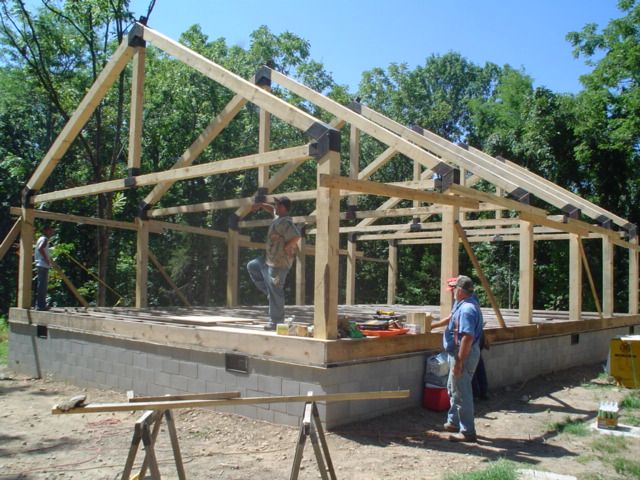
Part of the plan for the day was about networking. Communities across Scotland are working together to improve their lives and environment, and the work being done at Tombreck with the Big Shed and Loch Tay Food Chain is really valid and inspiring. The Big Shed, built with timber from Bolfracks Estate and milled on site at Tombreck is really taking shape and is going to be of real benefit to the area as a nexus for creativity, shared learning and capacity building. The open day as a whole was a great opportunity for people to meet and chat (network).
Dennis Anderson of Scottish Sawmilling Services who did the milling for The Big Shed dropped in at the open day which was very nice.
Georgia's baskets and the Rowan poles looked the part.The wood slab is from a 300 year old oak
One of the highlights of the day was the Iron Horse demonstration, from Artcom Tradebridge, suppliers of interesting forest machinery. The demo was a bit later than planned and as such made a nice end to the day.
Hooray - It's time for the Iron Horse Demo'.
Although a small machine it can pull logs with ease.
Incidentally I was recently introduced to this rather good palindrome, from a 20 year entrant to a writing competition called U@50, needless to say it stunned the judges. I thought I was clever realising Glenelg was a palindrome, but this is something else altogether....http://www.youtube.com/watch?v=aRG4ySdi_aE&feature=related
So as the big day approaches, is everything ready? "Probably" is the only answer I can give. In the last blog I welcomed back my old friend Rain, who is welcome to go now, any time he wants to... Taxi for Rain please.... or at least be elsewhere on Saturday. This uncertainty with the weather is part of what makes it hard to know how ready you are.
Oh Mighty God of Rain- Will you be blessing us with your watery gifts tomorrow? If the weather is nice and sunny (no offence Rain) I plan to have some of the event outside in front of the church and have the consultants inside, answering questions and generally consulting on multiple aspects of wood heating. Outside will be the Loch Tay Food Chain and Big Shed representatives and also the various products for sale including some amazing woven creels, baskets an platters from local weaver Georgia Crook who has a studio and work on sale at Tombreck.
Just a few glimpses of Georgia's work reveal both her talent and the incredible beauty and texture of the natural materials she works with - no plastics here.
As to the day being a success, if just one person visiting tomorrow fits a wood heating system as a result of the information they have learnt then the day will have been a success in my opinion. Once that person, (very happy at having such cheap and good heating) starts telling their neighbours, " I wish I'd done it years ago" and people can see that these systems actually work and are not difficult to use, then more people will fit them.As woodfuelled heating systems become increasingly common, so oil heating with its ever rising cost and pollution will seem, even more than now, a poor solution to the problem of heating.
Rowan poles from Coppice Experiment 2, available for sale on the big day. An ideal gift for the Rowan pole collectors we all know and love. These systems are so common in areas just like the glen all over the Nordic Countries, Austria, Poland, Germany, Canada, U.S.A.... In Finland there are numerous examples of wood fuel supply chains, often community owned cooperatives in which people take control of their own local heat needs. Local timber heats local houses, haulage costs are very low, so the fuel is more economical to produce and thus cheaper for the end user. Employment in forestry is guaranteed into the future, which ensures good sustainable forestry practice and as these chains are often community owned, any profit goes back into the community, rather than into the pockets of distant oil barons whose increasingly desperate ransacking of the worlds stored carbon (or oil) is paid for by our need for heat. I certainly know where I would like the profits from heating my house to go and it isn't to Shell, supplier of oil to Glenlyon and environmental vandals par excellence. If Ogoniland was in America, not Africa then one day we might have seen Shell getting hauled over the coals alongside BP. The behaviour of Shell in Ogoniland is truly shocking, and deliberately so which makes it much much worse.
Ogoniland in Nigeria, undoubtedly a lot nicer before Shell came along.




 J
J
 R
R
 S
S